APTAS
Atmospheric Polar Transmission Alignment Satellite
The Atmospheric Polar Transmission Alignment Satellite (APTAS) is the first student CubeSat developed at Luleå University of Technology (LTU). The goal of the project is to design, build, test, and operate a 1U CubeSat that will provide calibration signals to the EISCAT_3D antennas. The project also aims to enable future CubeSat projects within the university.
Project Status
APTAS latest news
View all posts »Follow the project latest news and updates
Main parameters
10x10x10cm (1U CubeSat)
1 kg
432-438 MHz (UHF)
LEO ~500 km
TBD
Magnetorquer coils
Coarse Sun Sensors, Magnetometers, MEMS Gyroscope
5 Years
3D Model
The Satellite
Stack
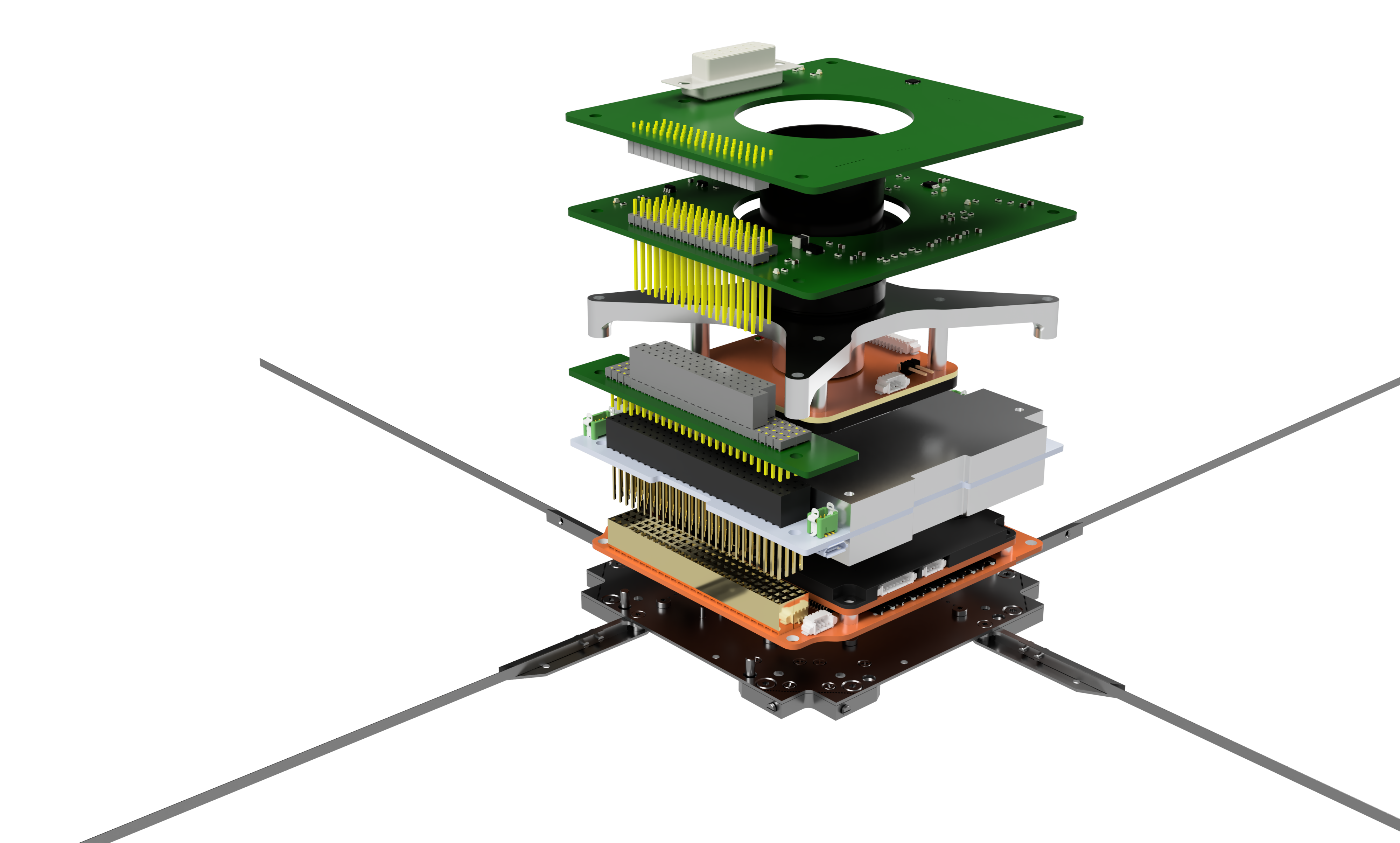
The satellite subsystems and payload are composed of multiple boards and components stacked and interconnected through a pin stack.
Umbilical Board
Sits at the top of the satellite stack and provides the primary external interface while on the ground. It enables connection to ground support equipment as well as access for debugging and testing. The board also houses the ADCs that digitize the signals from the CSSs.
EISCAT Calibration Transmitter (ECAT)
The main payload of the satellite. It generates a stable 233 MHz reference signal that will be used to calibrate the phased array antennas of EISCAT’s next-generation geospace radar, EISCAT 3D. This board has been developed by students with support from EISCAT.
Step-Up Board
An intermediate board that reroutes signals in the main connector stack due to space constraints.
EPS
The Electrical Power System (EPS) manages the satellite’s power supply, housing the batteries, managing charging, and distributing power to other components.
Transceiver
Receives and routes telecommands and encodes telemetry. Communication is handled using the CubeSat Space Protocol (CSP).
OBSW and OBC
The On-Board Software (OBSW) controls most satellite functionality and runs on the On-Board Computer (OBC).
Antenna
The antenna module is used for transmission of the ECAT signal as well as reception of telecommands and transmission of telemetry.
Payloads
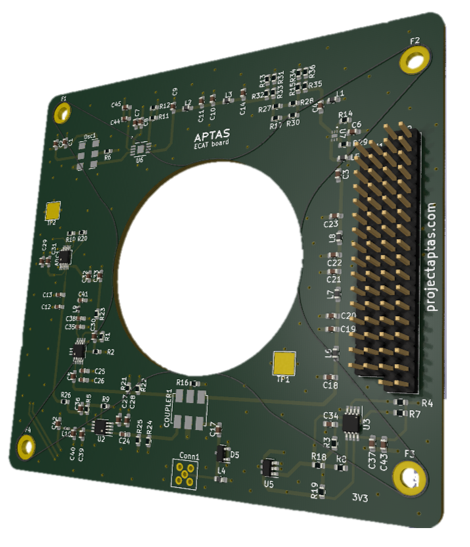
ECAT Board
Developed according to EISCAT’s specifications, it generates a precise 233 MHz reference signal for antenna calibration of EISCAT 3D.
Designed, manufactured, assembled and tested by students in Kiruna
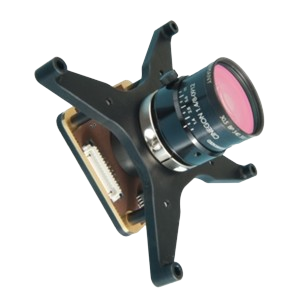
CAM
COTS camera to demonstrate the capability to capture images of the Earth and high-latitude atmospheric phenomena, such as aurora, from orbit
Used for outreach activities.
Model: GOMSpace NanoCAM C1U
How do I join?
At the start of each semester, GSO hosts a kickoff event where the projects are presented and students at the Space Campus can sign up for interviews. This is the primary recruitment channel, but you are also welcome to contact us in person or via email to express your interest in joining.